Views: 0 Author: Site Editor Publish Time: 2026-01-28 Origin: Site


In the world of industrial cutting, plasma cutting and laser cutting are two of the most commonly used techniques. Each has its own set of advantages and drawbacks, making them suitable for different applications. Whether you're working in metal fabrication, manufacturing, or even small-scale DIY projects, choosing the right cutting method can significantly impact the quality, efficiency, and cost-effectiveness of your work. In this blog post, we’ll compare plasma cutting and laser cutting, focusing on key components like plasma cutting torches, nozzles, CNC plasma systems, and the various parts and accessories like the trafimet a101, a141, shield, and ceramic rings.
Plasma cutting is a process that uses a high-velocity jet of ionized gas (plasma) to cut through electrically conductive materials. Plasma cutters are commonly used for cutting metals like steel, aluminum, brass, and copper. The plasma cutting torch is the main tool in this process. Plasma cutters can be manual or CNC (Computer Numerical Control) driven for precise, automated cutting.
Plasma Cutting Torch: The torch directs the plasma gas onto the material, creating a high-temperature arc that melts the metal.
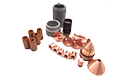
Trafimet A101 & A141: These are popular plasma cutting consumables. The Trafimet A101 is known for its precision and durability, while the Trafimet A141 is often used for heavy-duty applications. Both are part of the cutting torch assembly and help optimize the cutting process.
Nozzle: The plasma cutting nozzle is responsible for shaping and directing the plasma jet. It is a crucial component that influences the cut quality and speed.
Ceramic Ring: The ceramic ring is used in plasma cutting torches to insulate and protect the nozzle and other components from the extreme heat generated during the cutting process.
Laser cutting, on the other hand, uses a focused laser beam to melt, burn, or vaporize material. It is highly precise and often used for intricate cuts, especially in materials like thin metals, plastics, and ceramics. Laser cutting is also available in both manual and CNC versions, and it often provides cleaner cuts with less thermal distortion than plasma cutting.
Laser Cutting Nozzle: The nozzle in a laser cutting system helps focus the laser beam and blow away molten material from the cut. The nozzle's design is critical to ensure the laser’s efficiency and accuracy.
Shielding Gas: Laser cutting systems also use shielding gas (such as nitrogen or oxygen) to protect the laser and to blow away the molten material. This is essential to prevent oxidation and to improve the cut quality.
Now that we’ve looked at the mechanics of both plasma and laser cutting, let’s compare their pros and cons in different categories:
Plasma Cutting: Plasma cutting is generally faster when it comes to cutting thicker materials (usually over 1/4 inch). It can also cut through materials that are difficult for lasers, such as non-ferrous metals like aluminum.
Laser Cutting: Laser cutting is faster and more efficient for thinner materials. It provides higher precision, and the cuts are cleaner with minimal distortion.
Plasma Cutting: Plasma cuts tend to have a rougher edge compared to laser cuts, especially on thicker materials. However, newer technologies and better-quality nozzles (like the Trafimet A101 or A141) have improved plasma cut quality.
Laser Cutting: Laser cutting produces smoother, more precise edges with a cleaner finish. It's ideal for applications where the cut’s appearance is a top priority.
Plasma Cutting: Plasma cutters excel at cutting thicker materials, typically from 1/8 inch to 1-inch thickness.
Laser Cutting: Laser cutters are better suited for thinner materials (up to 1/4 inch), but some high-powered systems can handle thicker metals with specialized gas assist systems.
Plasma Cutting: Plasma cutters are generally more affordable than laser cutting machines. The initial investment is lower, and the maintenance costs are also more manageable. However, plasma cutting can be less efficient in terms of energy consumption and cutting speed for thinner materials.
Laser Cutting: Laser cutting systems are more expensive upfront. However, the precision and reduced need for post-processing can offset the higher initial cost. Operating costs are usually lower due to less material wastage.
Both plasma and laser cutting require regular maintenance and consumables. For plasma cutting, consumables such as plasma cutting nozzles, ceramic rings, and Trafimet torches (like the Trafimet A101 or A141) need to be replaced periodically. Laser cutters, while having fewer consumables, require the periodic replacement of laser cutting nozzles and maintenance of the laser source.
Plasma Cutting:
Ideal for heavy-duty industrial applications, especially for cutting thick metal sheets.
Commonly used in the automotive, construction, and aerospace industries.
Well-suited for cutting conductive metals like steel, stainless steel, and aluminum.
Laser Cutting:
Perfect for precision cutting of thin materials.
Used in electronics, signage, jewelry making, and any industry requiring intricate or fine cuts.
Laser cutting is also used in industries where the cut quality and edge finish are important, such as in the production of medical devices and high-end automotive components.
The decision between plasma cutting and laser cutting depends largely on the specific needs of your project. If you need to cut thick materials quickly and at a lower cost, plasma cutting might be the better choice. It’s also ideal if you're working with a variety of metals and need a more robust, industrial-grade solution. If precision, clean edges, and cutting thin materials are your priorities, laser cutting might be the best route, though it comes with a higher initial investment.
When considering your cutting options, be sure to look at the tools and consumables that will support your cutting method. Whether you're choosing between plasma cutting nozzles, CNC plasma systems, or laser cutting nozzles, selecting high-quality spare parts and consumables like the trafimet a101, ceramic rings, and nozzles will help ensure optimal performance and longevity for your equipment.
Ultimately, both plasma and laser cutting have their place in modern manufacturing and metalworking. By understanding your specific needs, you can make an informed decision and choose the cutting method that best suits your requirements.